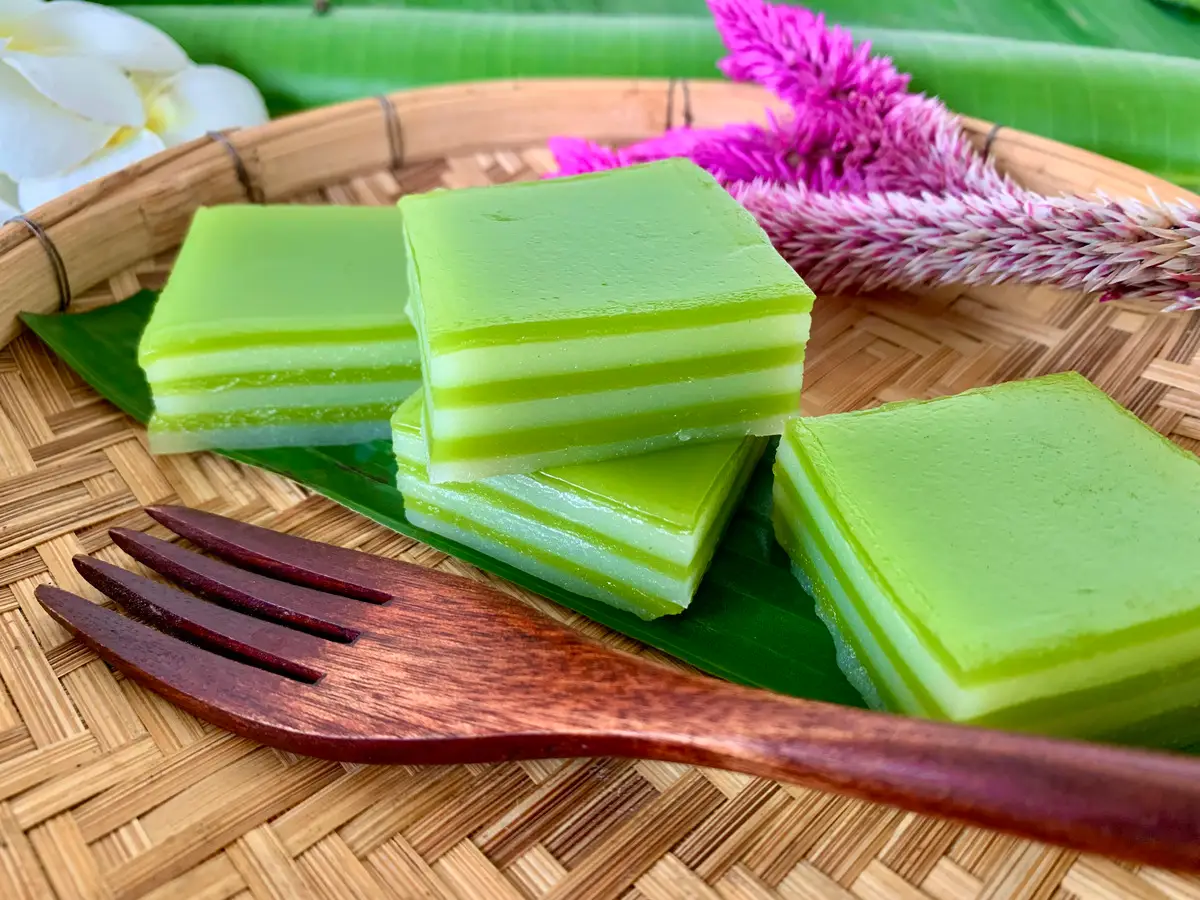
Kanom San: The Art of Layering – A Delicate Thai Treasure

elabuelofamilyrestaurant.com – Kanom San, often referred to as Thai Steamed Layer Cake, is a visually stunning and tastefully delightful dessert that has captivated the hearts of food enthusiasts around the globe. This exquisite confection, with its delicate layers of fragrant coconut milk and pandan-infused batter, is a true testament to the artistry and culinary prowess of Thai cuisine.

A Symphony of Flavors and Textures

At its core, Kanom San is a harmonious blend of flavors and textures. The batter, composed of rice flour, tapioca starch, and coconut milk, is infused with the aromatic essence of pandan leaves, lending it a subtle, verdant hue and a captivating fragrance. The layers, meticulously poured and steamed one by one, create a mesmerizing visual spectacle, reminiscent of a meticulously crafted masterpiece.

The Art of Layering

The process of creating Kanom San is a labor of love. Each layer is poured into a mold, steamed to perfection, and then carefully removed to reveal its smooth, glistening surface. This delicate layering technique requires patience and precision, as any imperfection can disrupt the overall aesthetic appeal of the dessert.   

A Culinary Tradition

Kanom San holds a special place in Thai culinary heritage, often served during festive occasions and celebrations. Its intricate preparation and elegant presentation make it a symbol of refinement and sophistication. In recent years, this traditional dessert has gained international recognition, captivating the palates of food lovers worldwide.

Beyond the Plate

Beyond its aesthetic appeal and delightful taste, Kanom San offers a unique cultural experience. It is a glimpse into the rich tapestry of Thai cuisine, a testament to the country’s culinary traditions, and a reminder of the intricate artistry that goes into creating such a masterpiece.

A Modern Twist

While Kanom San remains a cherished classic, modern chefs have embraced its versatility, experimenting with different flavors and presentations. Some have incorporated exotic ingredients like durian or lychee, while others have played with unconventional shapes and sizes. These innovative interpretations have breathed new life into this timeless dessert, appealing to a wider audience and showcasing the endless possibilities of Thai cuisine.

A Culinary Journey

Whether you are a seasoned foodie or a casual dessert enthusiast, Kanom San is an unforgettable culinary experience. Its delicate layers, fragrant aroma, and harmonious blend of flavors make it a true delight for the senses. So, the next time you have the opportunity to indulge in this Thai treasure, savor every bite and appreciate the artistry and passion that went into its creation.

Art and History: Philadelphia’s Cultural Treasures

elabuelofamilyrestaurant.com – Philadelphia, often referred to as the “City of Brotherly Love,” is a vibrant tapestry of art and history. As one of the United States’ oldest cities, it boasts a rich cultural heritage that beckons both residents and visitors to explore its treasures. From iconic historical landmarks to world-renowned art museums, Philadelphia offers a unique blend of past and present that captivates the imagination.

A Historical Journey

Philadelphia played a pivotal role in the founding of the United States, making it a must-visit destination for history enthusiasts. The Independence National Historical Park is home to the Liberty Bell and Independence Hall, where the Declaration of Independence and the Constitution were signed. Walking through these sites offers a tangible connection to the nation’s revolutionary past.

Beyond these iconic landmarks, the city is dotted with lesser-known historical gems. Elfreth’s Alley, the oldest residential street in America, provides a glimpse into 18th-century life. Meanwhile, the Eastern State Penitentiary, once a revolutionary prison, now stands as a hauntingly beautiful museum telling stories of crime and punishment.

The Artistic Heart of the City

Philadelphia is not only steeped in history; it is also a thriving hub for the arts. The Philadelphia Museum of Art, with its grand staircase famously featured in the “Rocky” films, houses an impressive collection of works from across the globe. The museum’s diverse exhibitions span centuries and continents, offering something for every art lover.

The Barnes Foundation, another cornerstone of Philadelphia’s art scene, showcases an extraordinary collection of Impressionist, Post-Impressionist, and Early Modern paintings. Its unique display philosophy encourages visitors to view art in a new light, fostering a deeper appreciation for the pieces.

Street art also plays a significant role in Philadelphia’s cultural landscape. The Philadelphia Mural Arts Program has transformed the city into an open-air gallery, with murals adorning buildings in every neighborhood. These vibrant works of art reflect the city’s diverse communities and tell powerful stories of identity, resilience, and hope.

Discovering Cultural Neighborhoods

Philadelphia’s neighborhoods each bring their own cultural flavor to the city. In Old City, cobblestone streets and colonial architecture coexist with modern galleries and boutiques. South Philadelphia, renowned for its Italian Market, offers a sensory feast of sights, sounds, and tastes.

Fishtown, a former industrial area, has reinvented itself as a trendy enclave for artists and musicians. Its eclectic mix of restaurants, bars, and shops makes it a lively destination for those seeking a taste of Philadelphia’s contemporary culture.

Conclusion

Philadelphia stands as a testament to the enduring spirit of American history and the transformative power of the arts. Whether you are delving into its storied past or exploring its vibrant present, the city’s cultural treasures offer endless opportunities for discovery and inspiration. From the echoes of revolution to the brushstrokes of modern masterpieces, Philadelphia invites you to embark on a journey through time and creativity.

Mastering the Art of the Past: The Vintage Virtuoso

elabuelofamilyrestaurant.com – In a world that is constantly racing towards the future, there exists a unique breed of artist who finds inspiration in the past. The Vintage Virtuoso is not just a connoisseur of bygone eras but a masterful practitioner of the arts and crafts that have been perfected over centuries. This article delves into the life and work of such an individual, exploring the passion, dedication, and skill required to not only preserve but also reinterpret the treasures of yesteryears.

The Allure of the Past

For the Vintage Virtuoso, the allure of the past is not merely nostalgic but deeply artistic. It is the intricate details of a hand-carved chair, the soft glow of an Edison bulb, or the melodious chime of a vintage clock that captures their imagination. This fascination with history is not about living in the past but about drawing from its richness to create something meaningful in the present.

Mastering the Craft

The journey of the Vintage Virtuoso is one of continuous learning and mastery. Whether it’s the art of woodworking, the craft of pottery, or the skill of watchmaking, each discipline requires patience, precision, and an unwavering commitment to quality. These artists spend countless hours honing their skills, often apprenticing under seasoned craftsmen or scouring antique manuals for lost techniques.

The Creative Process

Creating in the vintage style is a delicate balance between respecting tradition and infusing modern sensibility. The Vintage Virtuoso must understand the historical context of their craft while also finding ways to make it relevant to contemporary audiences. This process involves a deep understanding of materials, an eye for design, and the ability to innovate within the confines of classic techniques.

Preserving History

One of the most significant contributions of the Vintage Virtuoso is the preservation of history. By keeping traditional crafts alive, they ensure that future generations can appreciate the beauty and complexity of past eras. This is not just about saving objects but about safeguarding the stories and skills that are embedded within them.

The Impact on Modern Culture

The work of the Vintage Virtuoso has a profound impact on modern culture. It challenges our disposable society by promoting sustainability and craftsmanship. It also enriches our cultural landscape by reminding us of our roots and the timeless beauty that can be found in the art of the past.

Conclusion: A Bridge to the Past

The Vintage Virtuoso stands as a bridge between the past and the present, a reminder of the enduring power of tradition and craftsmanship. Through their work, they not only preserve history but also inspire a new appreciation for the artistry that has shaped our world. As we continue to march forward into the future, the lessons and beauty of the past, as interpreted by these virtuosos, remain as relevant as ever.

Fruit in Art and Culture: Symbolism Through the Ages

Fruit has been a perennial subject in art and culture, transcending mere representation to embody a rich tapestry of symbolism and meaning. Throughout history, artists have used fruit as a versatile medium to convey a multitude of messages, from the ephemeral nature of life to the seductive power of temptation. This article explores the multifaceted role of fruit in art and culture, tracing its significance from ancient times to the contemporary era.

Ancient Representations

In ancient civilizations, fruit was often depicted in art as a symbol of abundance, fertility, and the gods’ favor. The ancient Egyptians, for example, included images of fruit in their tomb paintings to ensure a bountiful afterlife. Similarly, in ancient Greece and Rome, fruit was a common motif in mythological scenes, symbolizing the gods’ generosity and the earth’s fertility. The grape, in particular, was closely associated with Dionysus, the Greek god of wine, representing ecstasy, ritual madness, and religious mystery.

The Renaissance: Still Life and Beyond

The Renaissance period saw a surge in the popularity of still life paintings, with fruit taking center stage. Artists like Caravaggio and Cézanne used fruit to explore the interplay of light and shadow, texture, and color. Beyond technical mastery, these works were imbued with symbolic meaning. The decaying fruit in Caravaggio’s paintings, for instance, serves as a memento mori, a reminder of the transience of life and the inevitability of death.

In contrast, the Dutch Golden Age painters often used fruit as a symbol of the Dutch East India Company’s global trade and the wealth it brought to the Netherlands. Exotic fruits like pineapples and bananas were depicted alongside local produce, showcasing the Netherlands’ economic power and cosmopolitanism.

Fruit as a Symbol of Temptation

Perhaps one of the most enduring symbols in art, fruit often represents temptation and the forbidden. The biblical story of Adam and Eve features prominently in Western art, with the apple (though not specified in the Bible) becoming synonymous with the original sin. This motif has been explored by countless artists, from Michelangelo’s Sistine Chapel to William Blake’s illustrations, each interpreting the theme of temptation and its consequences.

Fruit in Modern and Contemporary Art

In the 20th and 21st centuries, fruit continues to be a rich subject for artists, though its symbolism has evolved. Pop artists like Andy Warhol and Wayne Thiebaud have used fruit to comment on consumer culture and the mass production of goods. Warhol’s screen-printed Campbell’s soup cans and Thiebaud’s whimsical cakes and pies reflect the artificiality and abundance of modern life.

Contemporary artists, meanwhile, have embraced fruit as a symbol of cultural identity and globalization. The work of Yinka Shonibare, for example, often incorporates Dutch wax prints, a fabric with a complex history that reflects the intertwined histories of Europe, Africa, and the Americas. His use of these prints to depict fruits like bananas and pineapples comments on colonialism, trade, and the cultural exchange.

Conclusion

Fruit in art and culture is more than just a subject of beauty; it is a powerful symbol that has evolved over centuries. From ancient civilizations to the contemporary era, artists have used fruit to explore themes of fertility, temptation, mortality, and globalization. As we continue to navigate a rapidly changing world, fruit remains a versatile and evocative symbol, ripe with meaning and ready to be interpreted anew by each generation.